
You could spend a lifetime in Scotland chasing Open Championship courses and world-famous distilleries and never run out of reasons to go back. That is either terrifying or the best news you have heard all year, depending on your handicap and your liver. The country has five officially recognized whisky regions (Highlands, Speyside, Lowlands, Islay, and Campbeltown) and more top-100 golf courses than any comparable piece of ground on the planet. Matching them up by region is not just efficient travel planning. It is the entire point.
Not every region is worth equal ink for a golf trip. Some combinations are natural. Others reward the traveler willing to get off the main road. Here are three you can actually build a trip around, plus a fourth waiting for your return visit.
One thing before we start. In Scotland it is whisky, no e. Get that right before you land or they will know immediately where you are from.
Region One: Fife - The Home of Golf Meets the New Wave of Whisky
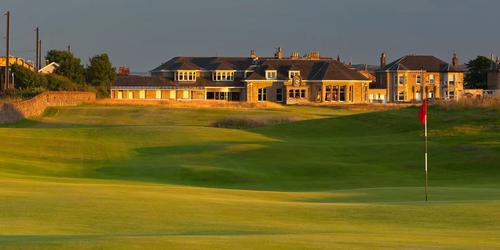
You come to St Andrews for the Old Course. That goes without saying. Getting on the Old Course takes planning or nerve, and ideally both. The surest path is booking through a tour operator well in advance. They hold allocated tee times and know how to secure them. The other route is the Daily Ballot, a lottery open to groups of two to four players. You enter by 2pm, two days before the day you want to play, submitting your names, home club, and handicaps online, by phone, or in person at the Old Pavilion. Results come out around 4:30 that same afternoon. You enter Monday, you find out Monday evening whether you are playing Wednesday. It is a vacation game of Russian roulette with a very civilized notification window, and it is entirely part of the experience. Solo golfers have their own option through the Singles Daily Draw, introduced in 2024 to replace the old overnight queue where devoted pilgrims used to sleep on a bench outside the pavilion. Single players register in person at the Old Pavilion or the Links Clubhouse between 9am and 4pm the day before they want to play. A randomized draw runs at 5pm and successful golfers are slotted into groups that need a fourth. No guarantee, but a genuine shot. Show up, put your name in, and see what St Andrews decides.The Old Course has hosted 30 Open Championships and remains the pilgrimage every golfer owes themselves at least once. Caddies are not optional here. The hidden bunkers alone will cost you two strokes and a lot of pride before you figure out the lines off the tee. The Road Hole, the 17th, is a par 4 that plays like a par 5 into any wind. It is a blind tee shot over the corner of the Old Course Hotel, a slender fairway that doglegs hard right, and a Road Hole Bunker guarding the front of the green that has ended more Open campaigns than bad weather. Players drive over a replica railway shed tucked into the left corner of the hotel. The line used to be over the letter "O" of the sign. Just know that wherever you aim, the hotel now has a rubber roof installed specifically because golfers kept breaking the slate tiles. The repair bill was reportedly running about $2,000 a week. That tells you everything you need to know about the hole.
The Old Course Hotel sits right up against that 17th fairway. There is not a more immersive base of operations in golf. This five-star property has 144 rooms including 35 suites, and rooms looking out over the links are worth every extra pound. At the base of the hotel sits the Jigger Inn, a proper pub with real ale and the kind of lived-in atmosphere that makes you feel like you have been coming here for years. Grab a dram after your round or switch gears entirely and have a pint. Nobody keeps score at the Jigger Inn.
Just a few miles down the coast sits Kingsbarns, a Kyle Phillips design on a stunning stretch of Fife coastline that has anchored the Alfred Dunhill Links Pro-Am for well over a decade. Wide fairways, the North Sea visible on the right for most of the back nine, and a par 3 at the 15th played directly toward the water that is either breathtaking or disorienting depending on how your round is going. Then there is Carnoustie, 45 minutes up the coast. Locals call it Car-nasty with a certain pride. It hosted The Open in 2018, plays brutally into any wind, and nobody leaves feeling like they cracked the code. The closing stretch along the Barry Burn is as severe as anything in championship golf.
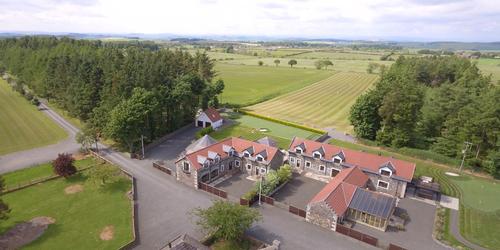
The whisky story in Fife is newer than the golf and all the more interesting for it. Kingsbarns Distillery sits just outside St Andrews in a charming 18th-century farm steading, open seven days with tours, tastings, a shop, and a cafe with outdoor seating. They use Fife-grown barley and water drawn from an aquifer 100 meters below the property. The result is light, floral, and approachable. Nothing like the peated monsters from Islay, and that is entirely the point. The setting alone is worth the drive: barley fields on one side, woodland on the other, a glimpse of the sea on a clear day. Book a tour in advance; the cafe and shop welcome walk-ins.
Then stop at Lindores Abbey, about 20 miles west on the way back toward St Andrews. Considered the spiritual home of Scotch whisky, spirits have been distilled here since at least 1494. That is not a typo. If you are going to drink whisky in the country that invented it, paying respects at the source takes about an hour and is worth every minute.
The Must-Do: Fisher and Donaldson, St Andrews
Fisher and Donaldson in St Andrews has been making shortbread properly for a long time. Get the Million Dollar Shortbread: caramel, chocolate, proper butter shortbread. Walk out onto the Scores and eat it looking at the Old Course. Nobody needs to know how many pieces you had.Region Two: The Highlands and Speyside - Three Courses, Two Regions, One Magnificent Detour
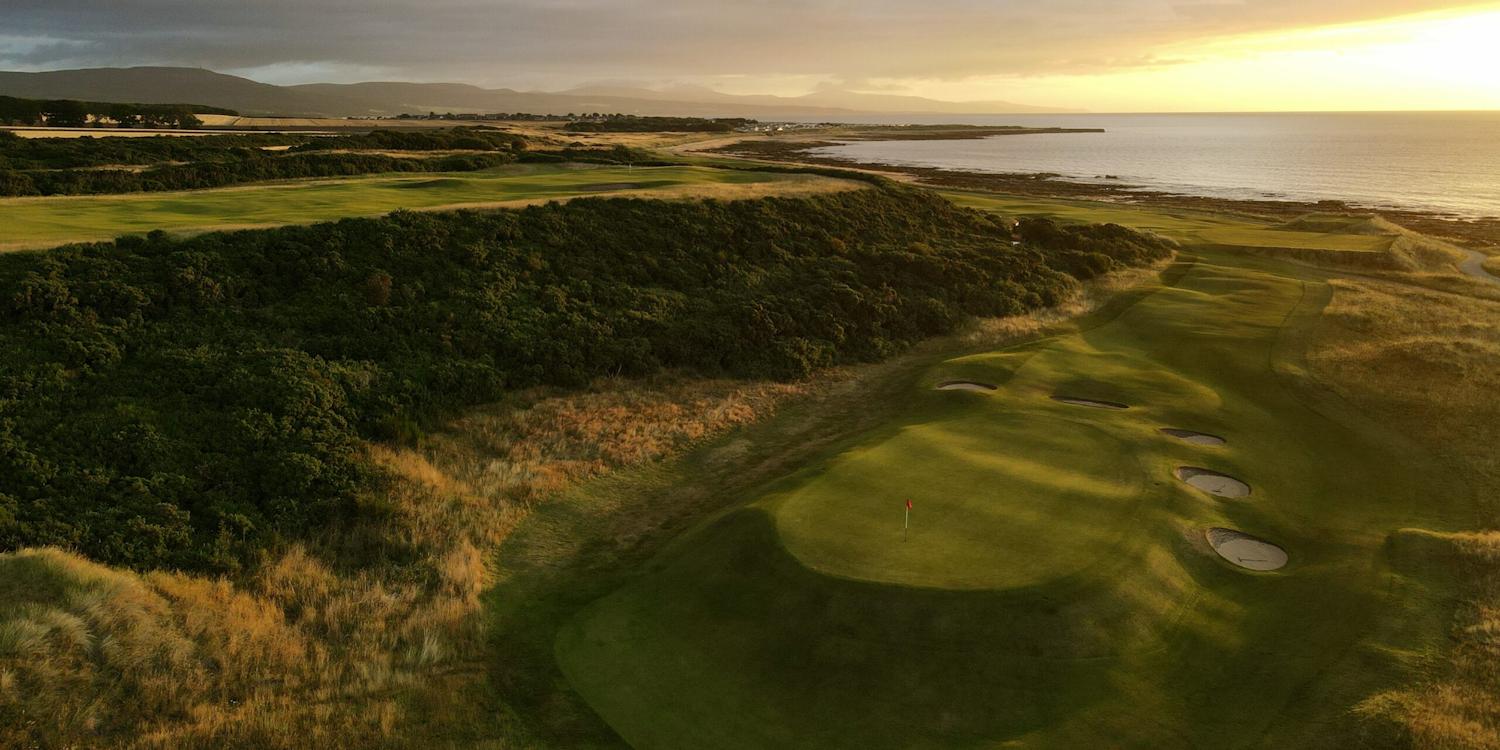
Base yourself in Inverness. Good hotels, train connections from Edinburgh and Glasgow, and an airport that links to London. From there you can reach some of the best golf on the planet within an hour, and Speyside within 90 minutes.Royal Dornoch leads the way. The first records of golf being played on the links at Dornoch date back to the 16th century. Tom Watson called it the most fun he ever had playing golf, which is a strong endorsement from a man who has played everywhere. The Championship Course sits on a narrow strip of linksland above the Dornoch Firth with plateau greens that can be infuriating and beautiful in roughly equal measure. It is remote by Scottish standards, about an hour north of Inverness. That remoteness is part of what makes it special. You do not end up at Royal Dornoch by accident. You have to mean it.
Thirty minutes back toward Inverness sits Cabot Highlands, home of Castle Stuart Links. The course opened in 2009 and was immediately deemed suitable to host the Scottish Open on the European Tour, with dramatic elevation changes and infinity greens tumbling toward the Moray Firth. Where Royal Dornoch is ancient and humbling, Castle Stuart is modern and spectacular. Playing both on the same trip is the kind of itinerary golfers plan years in advance and talk about for the rest of their lives.
Now add Brora to the itinerary, about 20 minutes north of Dornoch on the A9, and you have a Highland loop that no amount of money can replicate anywhere else. Brora Golf Club was founded in 1891. James Braid, five-time Open Champion and the most prolific course architect in Scottish history, arrived by train in January 1923, walked the existing layout, selected his preferred tee and green sites, and departed on the following train south. He charged the club 25 pounds plus expenses. What he left behind is one of the rawest, most authentic links experiences in Scotland.
The land at Brora has been shared with the local crofting community since the beginning. Under Highland law the crofters hold grazing rights, which means sheep and cattle wander freely across the fairways to this day. Single-strand electric fences protect the greens. The local rules specifically address what to do if you find yourself in a hoof print or downwind of something unpleasant. The debate among members over whether to finally remove the livestock is ongoing. On one side is the case for reclaiming Braid's full design, including fairway bunkers never built for fear the animals would destroy them. On the other side are the Highland cows. Up close they are magnificent: shaggy, amber-colored, entirely unbothered by your presence or your iron selection. If you are going to encounter one anywhere, a James Braid links on the Sutherland coast is the right setting. Five-time Open Champion Peter Thomson, a man who played everywhere and said so about nothing lightly, called Brora the best traditional links course in the world. Go see what he meant.
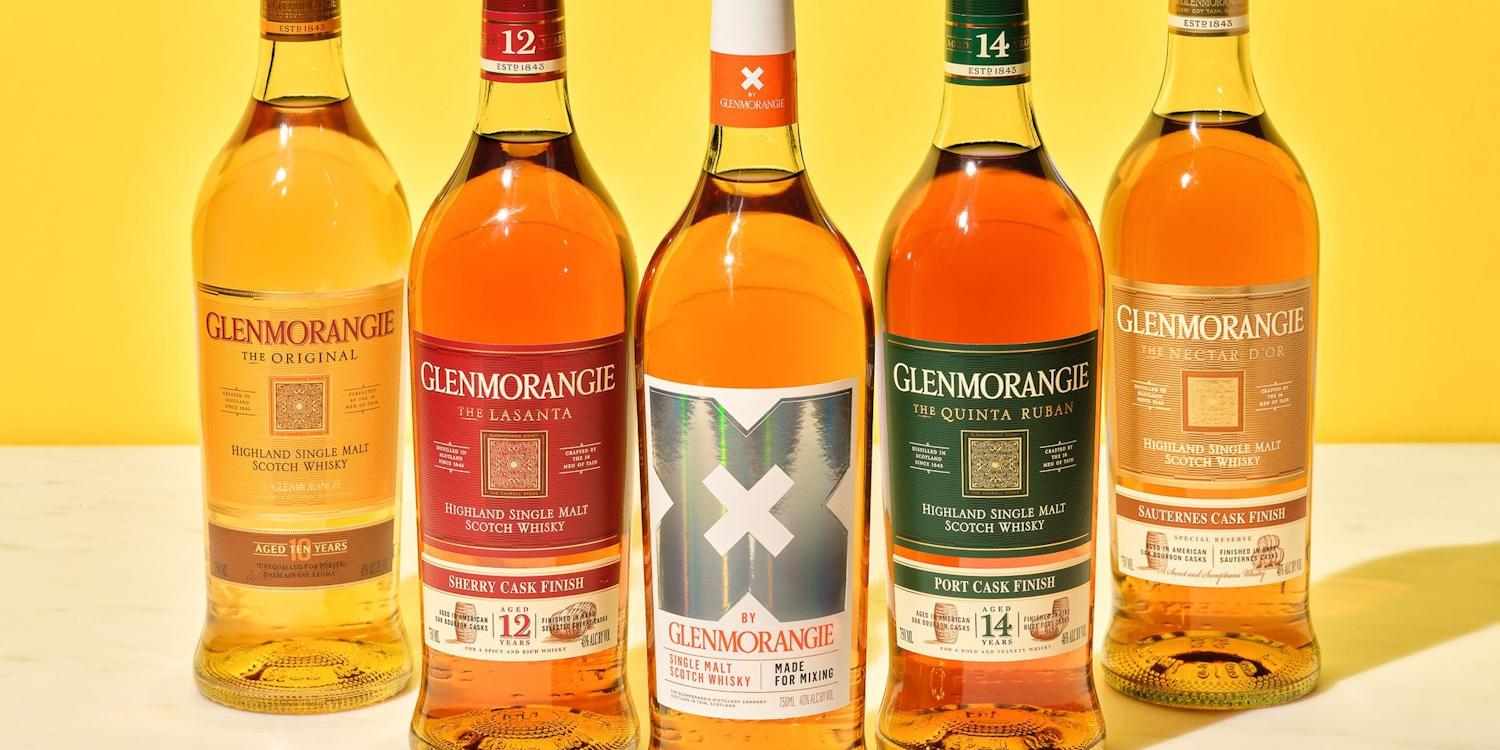
The golf and whisky connection in this part of the Highlands is not incidental. Glenmorangie is the official whisky of Royal Dornoch, and the 18th hole on the Championship Course was renamed "Glenmorangie" in 2013 in honor of the partnership. A subtle suggestion of what waits in the clubhouse after you finish. The distillery sits in Tain, about 10 minutes south of Dornoch on the A9, and is worth the stop even if you think you already know the whisky.
The current lineup runs from the Original 12, light and honeyed and exactly what a Glenmorangie should taste like, through the Lasanta 15 finished in sherry casks, up to the 18-year for those who want to do this properly. Then there is the Signet. It uses high-roast chocolate malt barley, the kind normally used to produce porters and stouts, alongside Cadboll estate barley, with some of the distillery's oldest stock aged 35 to 40 years blended in. Dark chocolate, espresso, dried fruit. It is the kind of whisky that stops a conversation mid-sentence. Order it after the round, not before.
While you are in Brora, Clynelish Distillery is right there: the Highland home of Johnnie Walker and one of the more accessible distillery visits in the north. The tour is genuinely interactive, built around the story of how Clynelish's rich, waxy character became the backbone of one of the most recognized blended whiskies in the world. The views from the sea-facing tasting bar are a bonus. It sits on the North Coast 500 scenic route if you are inclined to extend the trip further.
Now drive southeast into Speyside. The region sits between the River Spey and the Cairngorm Mountains, and its mild climate and abundant natural resources have shaped a distinctive style: typically elegant, complex, and approachable, with notes of honey, fruit, and gentle spice. Nearly half of all Scottish distilleries are packed into a relatively small footprint, which makes for extremely efficient drinking.
Glenfiddich is a strong starting point, family-owned, beautifully kept, and one of the few distilleries that handles the full process on-site from malting to bottling. Next door is the Balvenie, which still operates a traditional floor maltings, a genuine rarity anywhere in Scotland. For architecture and ambition, the Macallan distillery built into the hillside above its estate is one of the more impressive buildings in the country, whisky or otherwise. The tastings run toward the premium end. This is not the place to be shy about what you spend on a dram.
The Must-Do: Culloden and Cawdor
Culloden Battlefield is 10 minutes from Inverness. The Jacobite Rising ended here in 1746 and the visitor center tells both sides honestly. Drive past Cawdor Castle on the way to Speyside and tell your group you saw the original setting for Macbeth. Whether that lands depends entirely on who you are traveling with.Region Three: Ayrshire and Campbeltown - The West Coast Closer
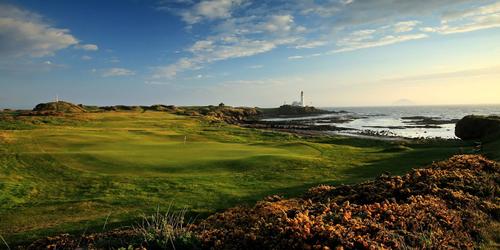
Ayrshire is where Trump Turnberry holds court. Named Best Five-Star Hotel at the Scotland Prestige Hotel Awards and the only resort in the United Kingdom to earn the Forbes Travel Guide Five-Star designation, Turnberry sets a standard that very few properties in the world reach. The Ailsa Course. The lighthouse views across to Ailsa Craig. The Grand Tea Lounge with its panoramic outlook and whisky selection that will keep a serious drinker occupied for an evening. We have covered Turnberry in full elsewhere on these pages, but its place as the anchor of any Ayrshire golf trip is non-negotiable.Around it sits a lineup that would be the envy of most countries. Royal Troon. Prestwick, where The Open Championship was born in 1860 and which remains one of the most gloriously eccentric links courses in the world: blind shots, a Cardinal Bunker the size of a small county, and routing that defies every modern design convention in the best possible way. Dundonald Links, a Kyle Phillips design that hosted the Scottish Open in 2017. You could spend a week on this stretch of Ayrshire coastline and not exhaust it.
Then drive south to Campbeltown. The road takes you down the Kintyre Peninsula past farms and small villages and coastline that gets wilder the further you go. It is a commitment. Make it.
Machrihanish Golf Club is what is waiting at the end of that drive. Old Tom Morris shaped the layout in 1879, and the first hole has been argued about ever since. You stand on the tee above Machrihanish Bay facing a blind carry over the beach. It is a dogleg left, and the equation is straightforward: the braver the line you take over the corner, the shorter the hole plays. Most people chicken out and push it right. The ones who commit to the aggressive line either make birdie or find trouble they did not expect. There is very little middle ground on that tee, and it sets the tone for everything that follows.
Next door is Machrihanish Dunes, designed by David McLay Kidd, the architect who put Bandon Dunes on the map. Kidd grew up in this area and the project was deeply personal to him. On a parcel of land first recognized for its golfing potential by Old Tom Morris more than 130 years ago, Kidd found that the natural terrain produced 23 holes and he needed only to choose his favorite 18. The course was built on protected land with almost no earthmoving permitted. Seven of the 275 acres were disturbed in total, which means blind shots, natural routing, and golf that feels genuinely ancient despite opening in 2009. It ranks consistently in the UK top 100 and has been recognized as one of the most environmentally sustainable courses ever built.
The Village at Machrihanish Dunes gives you two hotels. The Ugadale Hotel and Cottages sits right in Machrihanish with a spa and the Kintyre Club restaurant steps away. The Royal Hotel in Campbeltown overlooks the harbour five miles down the road and is home to the Black Sheep Pub. That is where you go after Springbank.
Campbeltown was once the whisky capital of the world, with more than 30 distilleries operating in the 19th century. Today three survive: Springbank, Glen Scotia, and Glengyle. The character is its own thing entirely: briny, oily, and complex in a way that nothing from Speyside quite prepares you for.
Springbank is the one you are here for. It is the only distillery in Scotland that completes 100 percent of the process on site: malting, mashing, distilling, aging, and bottling, all in Campbeltown. The whisky carries the sea air in every bottle. Maritime, slightly smoky, building complexity rather than announcing it. Springbank does not market aggressively. It does not need to. The people who know, know.
The Must-Do: Mull of Kintyre Lighthouse
Paul McCartney owned a farm nearby for decades and wrote the song you are now humming. The drive is a single-track road along the cliff edge with the Irish coast visible across the water on a clear day. Go at dusk if you can manage the timing. Then find a pub in Campbeltown.A Note on Planning
You cannot do all three regions in one trip, and you should not try. Each deserves its own visit. Fife works naturally as a long weekend out of Edinburgh. The Highlands and Speyside want at least five days with Inverness as a hub. Trying to rush it shortchanges both the golf and the whisky. Ayrshire is an easy drive from Glasgow, but Campbeltown demands the commitment of the full journey south.A fourth region is waiting. Islay, pronounced Eye-la, has the Machrie golf course at Another Place Hotel, and Laphroaig, Lagavulin, and Ardbeg all sitting on the same three-mile road along the island's south coast. That is a standalone trip with its own article and its own argument for why peated island whisky pairs with links golf better than anything else on earth. Save it for next time.
Scotland rewards commitment every time. You already knew the golf would. The whisky is simply confirmation that whoever designed this country understood how to put a good day together.